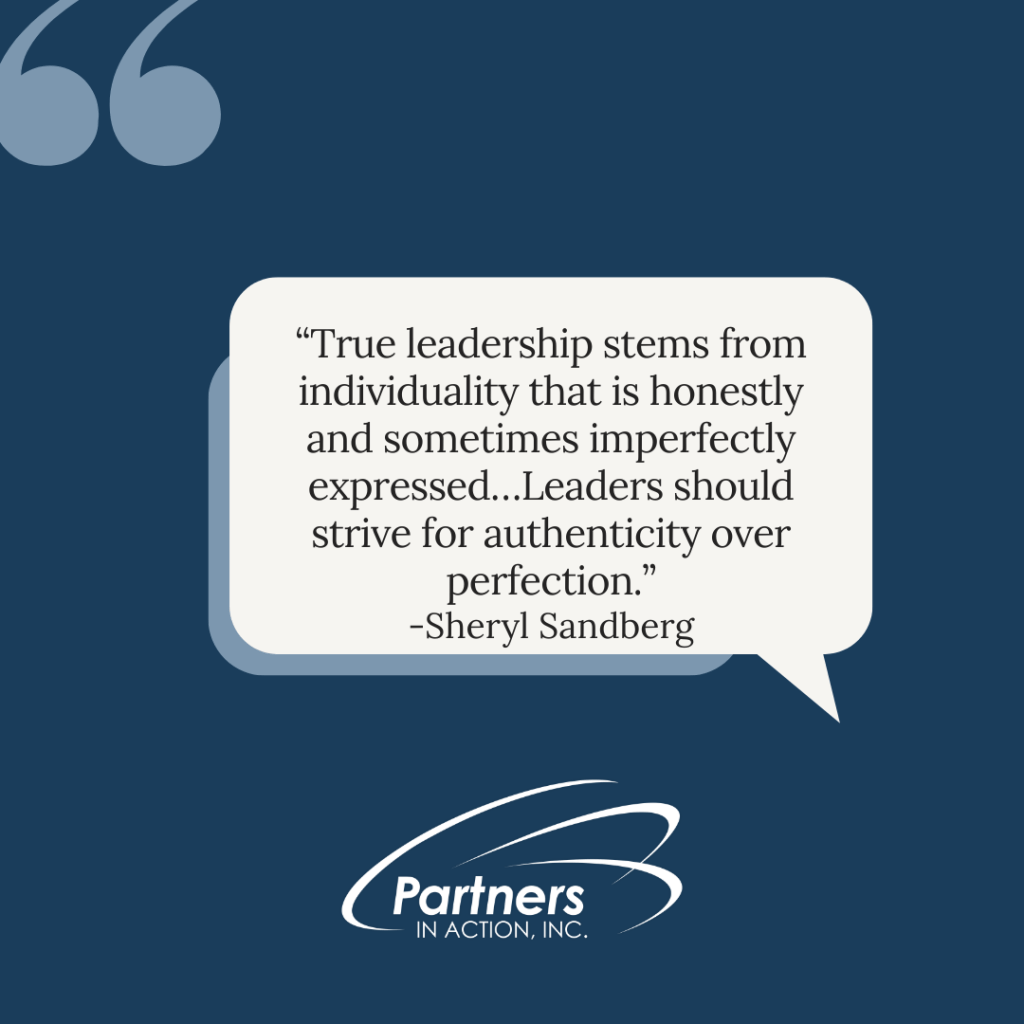
Perfection is an ideal worth pursuing, and we should aim to be our best. Doing excellent work motivates us to keep learning and growing. These habits mark strong and successful leaders. We must avoid assuming we know enough and stay open to learning new things.
Perfection, however, can limit us. Leaders may feel they have failed when problems occur or mistakes happen. This can erode confidence. Being too perfectionistic can also create paralysis, making us afraid to decide for fear of being wrong.
Leadership requires acknowledging our shortcomings and accepting that we are not perfect. Humility helps us admit our mistakes and apologize. This frees us and others to build honest, transparent relationships. Such relationships support collaboration and increase productivity.
Transparency also builds trust. When people see who we are and watch us live our values, trust grows. Without trust, we cannot lead. As one leader said, “You can require someone to show up for a paycheck, but you cannot require them to give their best. That is a gift.” Trust opens the door to meaningful engagement and great work.
Authenticity encourages collaboration and honest conversation. Team members hesitate to share feedback when they are unsure how we will respond. Being open makes those discussions easier and more productive.
Transparency and authenticity form the foundation of trust and leadership. To strengthen them, set goals for learning and growth. Coaching can increase self‑awareness and support growth in a safe space. Instead of feeling discouraged by imperfection, look forward to becoming a stronger leader each year.
Perfection is unreachable, but transparency and growth are within your control.