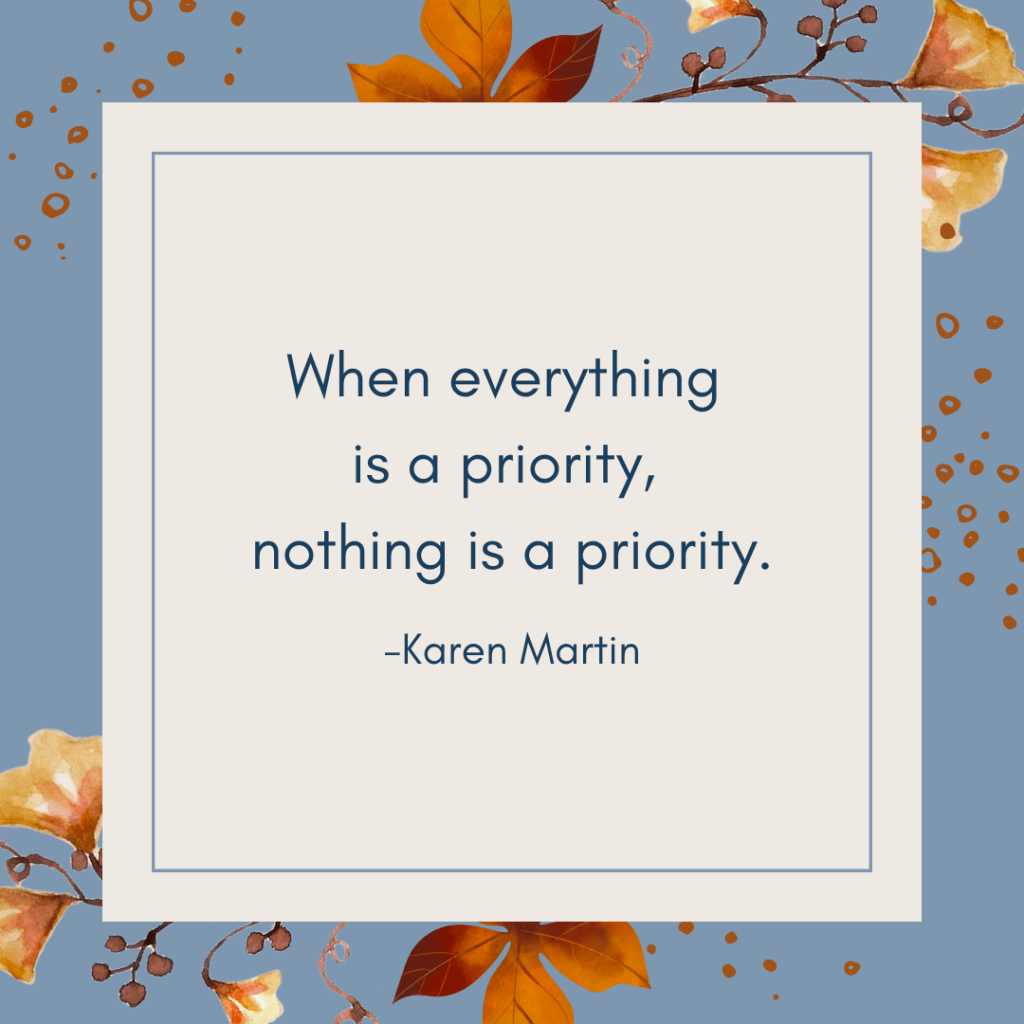

As you browse sales ads or walk through stores, you’ll notice a mix of holiday decorations – pumpkins, turkeys, ornaments, and plenty of gifts and treats. Retailers are encouraging us to buy everything at once and as early as possible. Sometimes, you might even need to check your calendar just to remember which holiday is coming next!
This rush can feel overwhelming and stressful, especially if you give in to the pressure to do it all immediately. But the truth is, not everything is equally important. As Karen Martin wisely said, “If everything is a priority, nothing is a priority.” While there are moments of urgency that demand quick action, even in a crisis, it’s essential to identify step 1, step 2, and so on.
Why does this matter? Because prioritization creates clarity and momentum. When your team knows what matters most, they can focus their efforts, achieve small wins, and build confidence. These small successes foster collaboration and a sense of progress.
Although multitasking is common today, without clear priorities, critical tasks can be overlooked. Misalignment between teams and leaders often leads to frustration – especially when a team member invests heavily in something that turns out to be a lower priority. In such cases, the real question is: Was the leader clear about what the top priorities were?
Effective communication and prioritization start with leadership. Saying “yes” to some priorities means saying “no” to others. To be fair to your team, you must allocate resources to the initiatives that will have the greatest impact on achieving your goals.
So next time you’re tempted to treat all tasks, projects, and goals as equally important, take a pause. Ask yourself: Are you setting your team up for success, or for failure? Instead, empower them with clarity, confidence, and momentum by clearly communicating expectations and priorities.